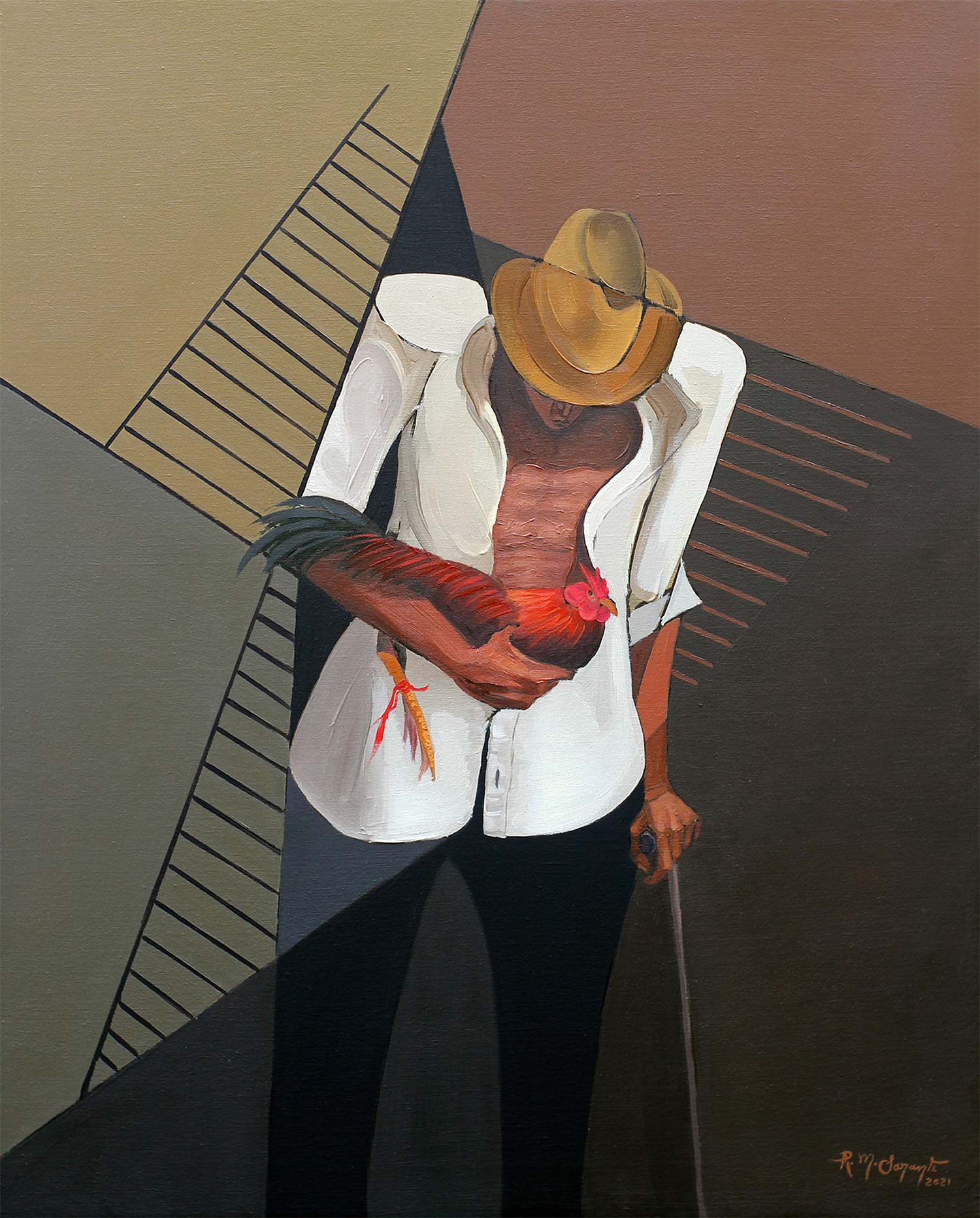
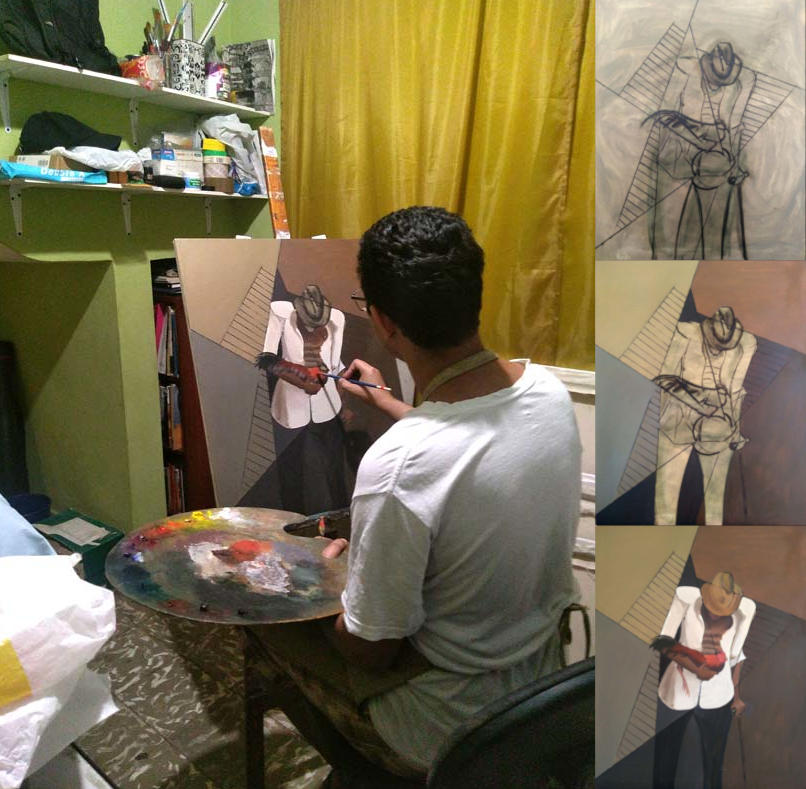
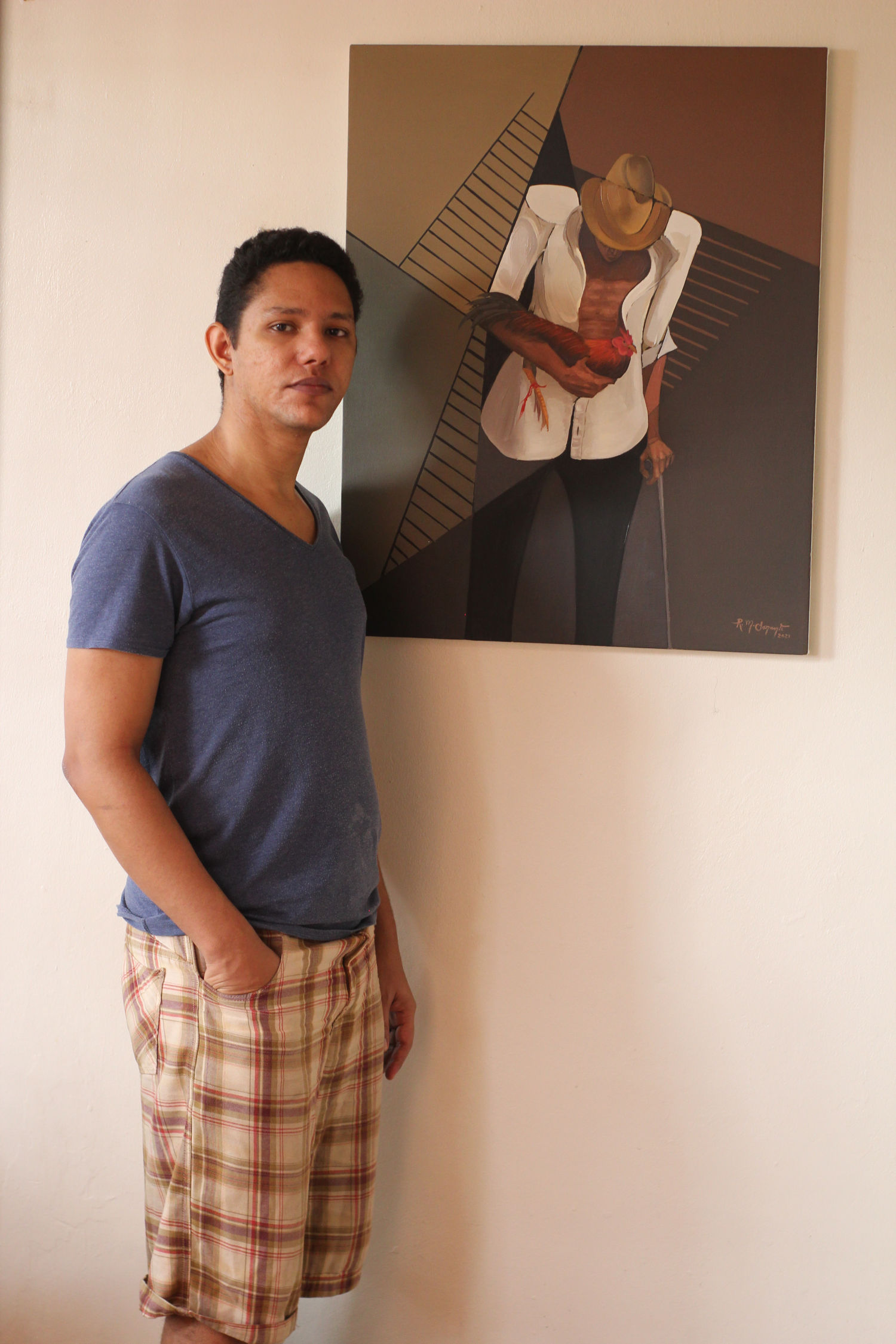
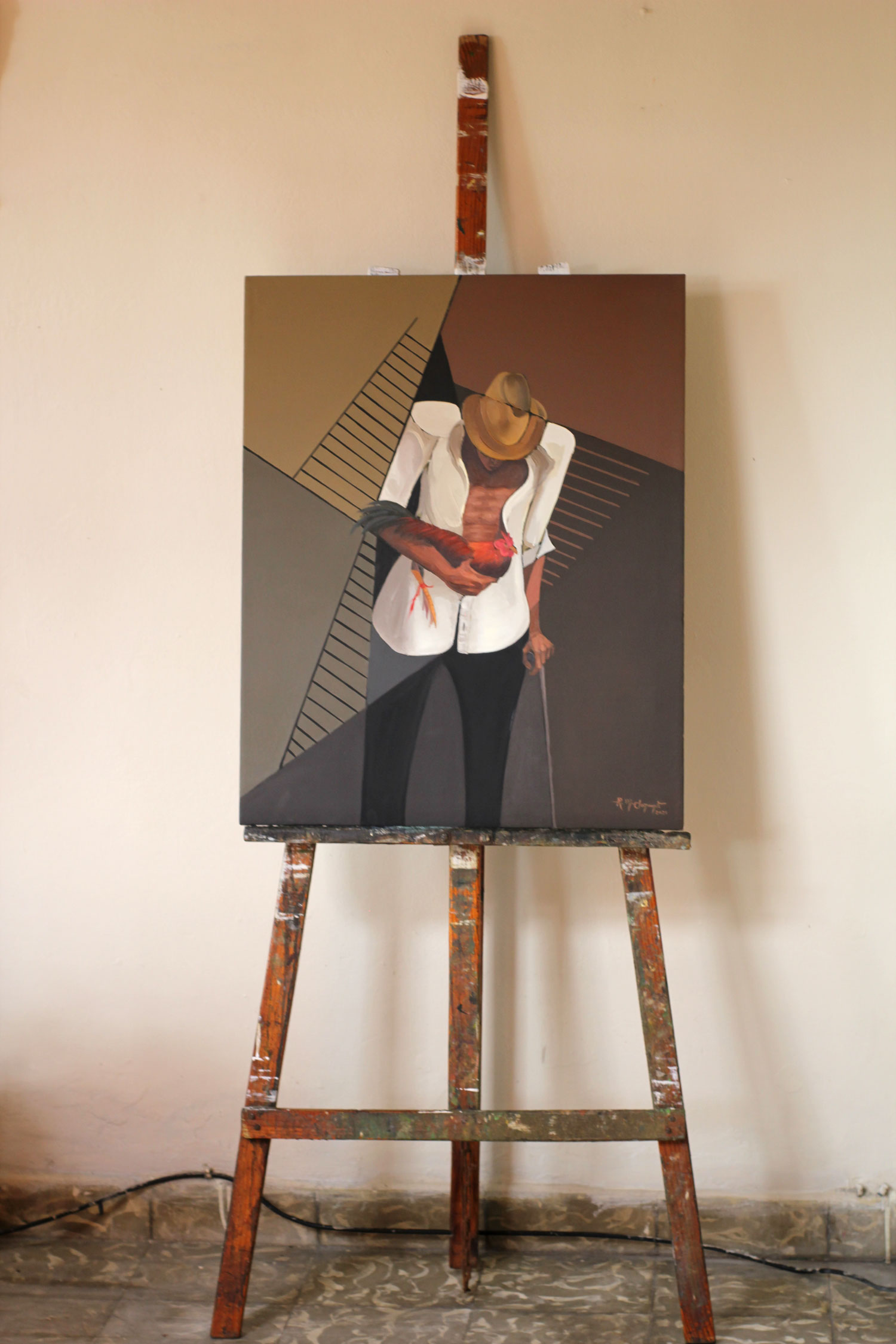
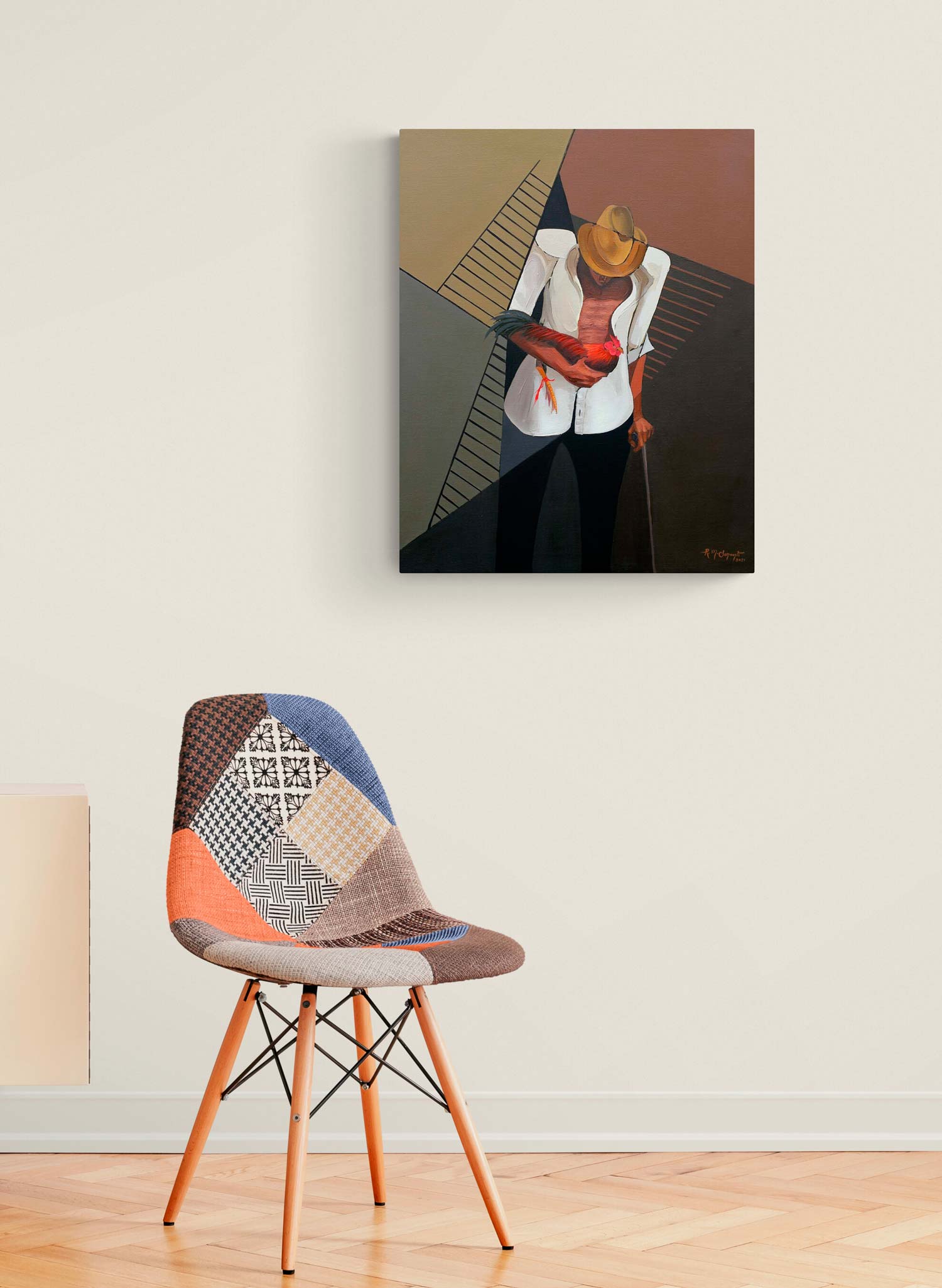
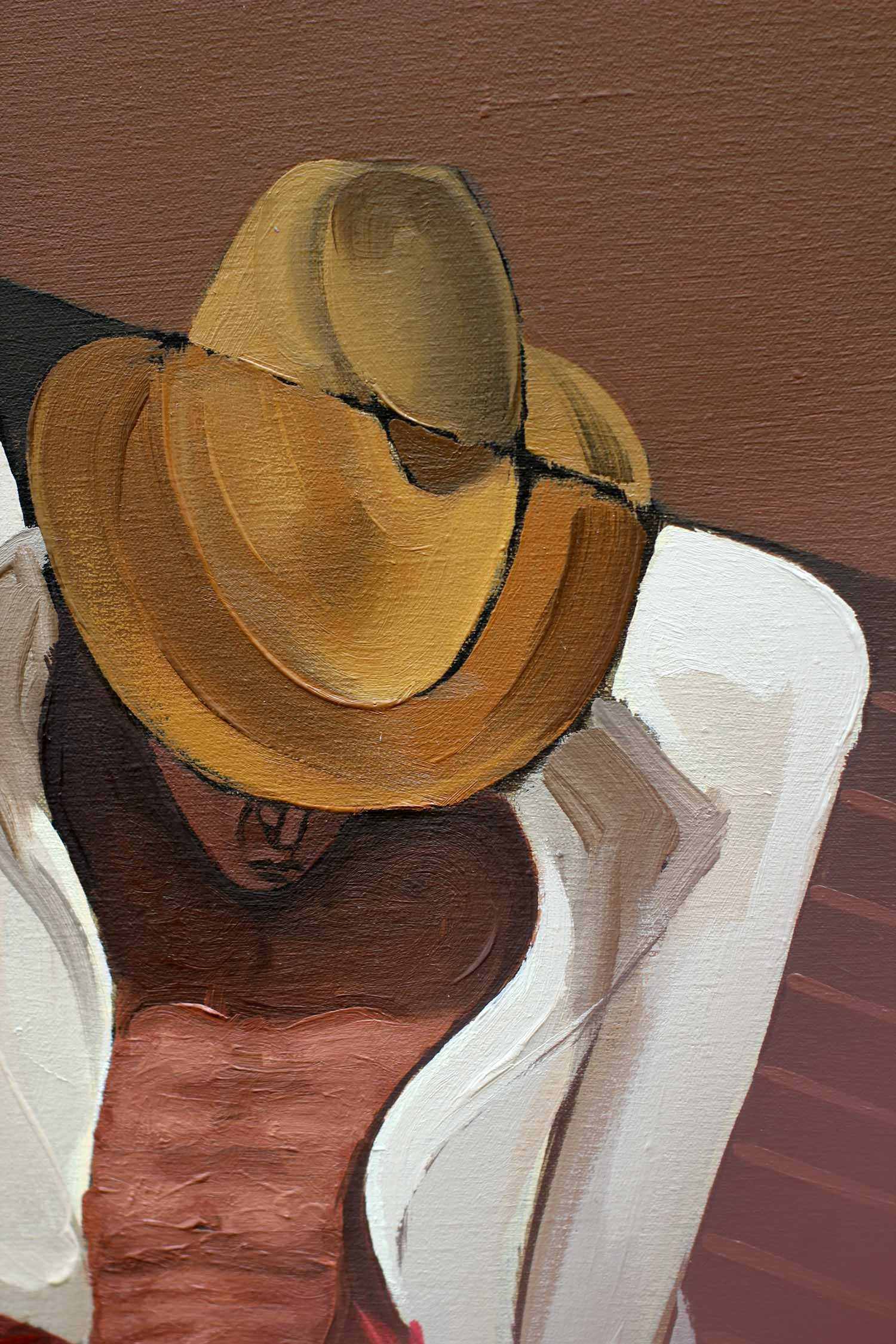
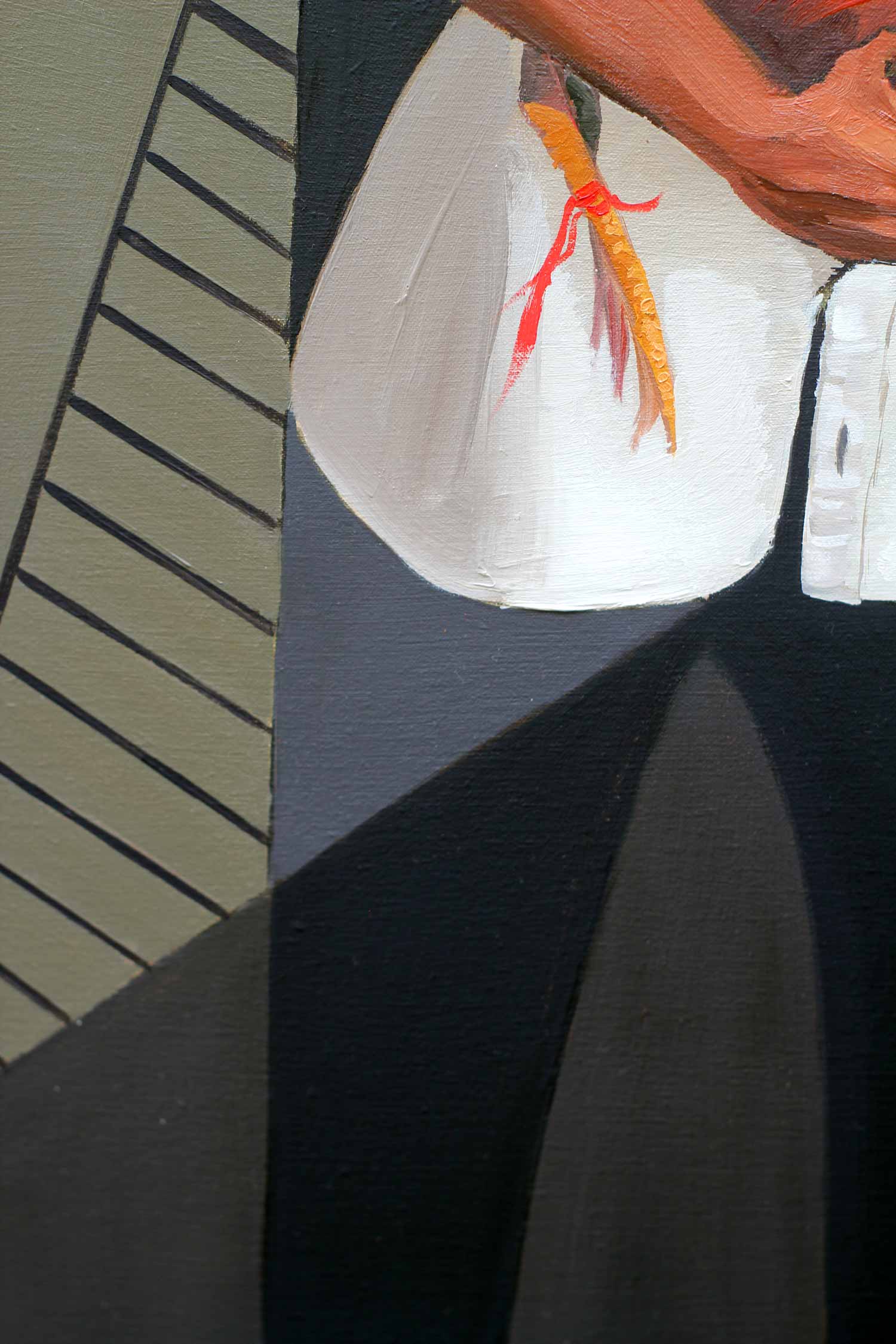
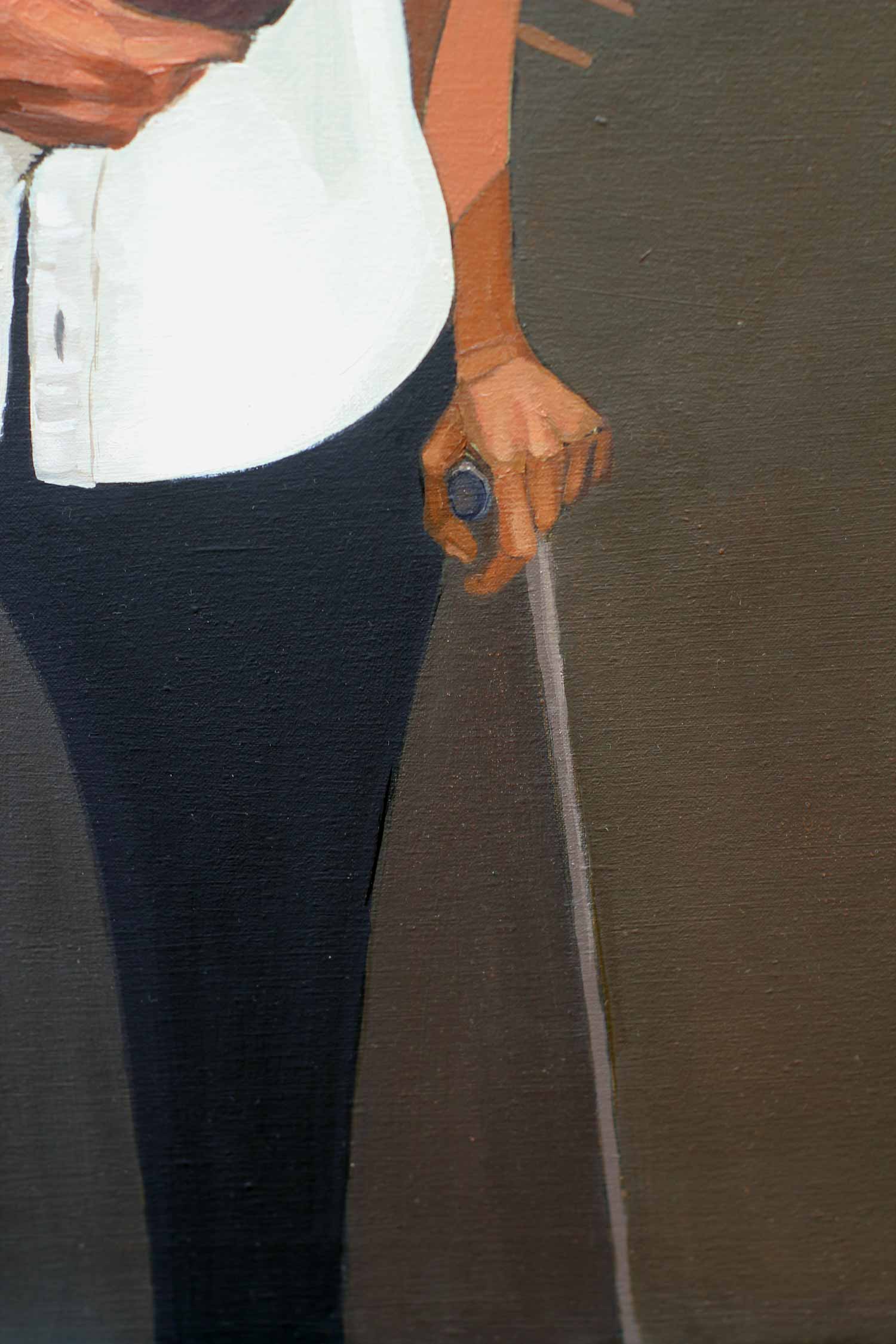
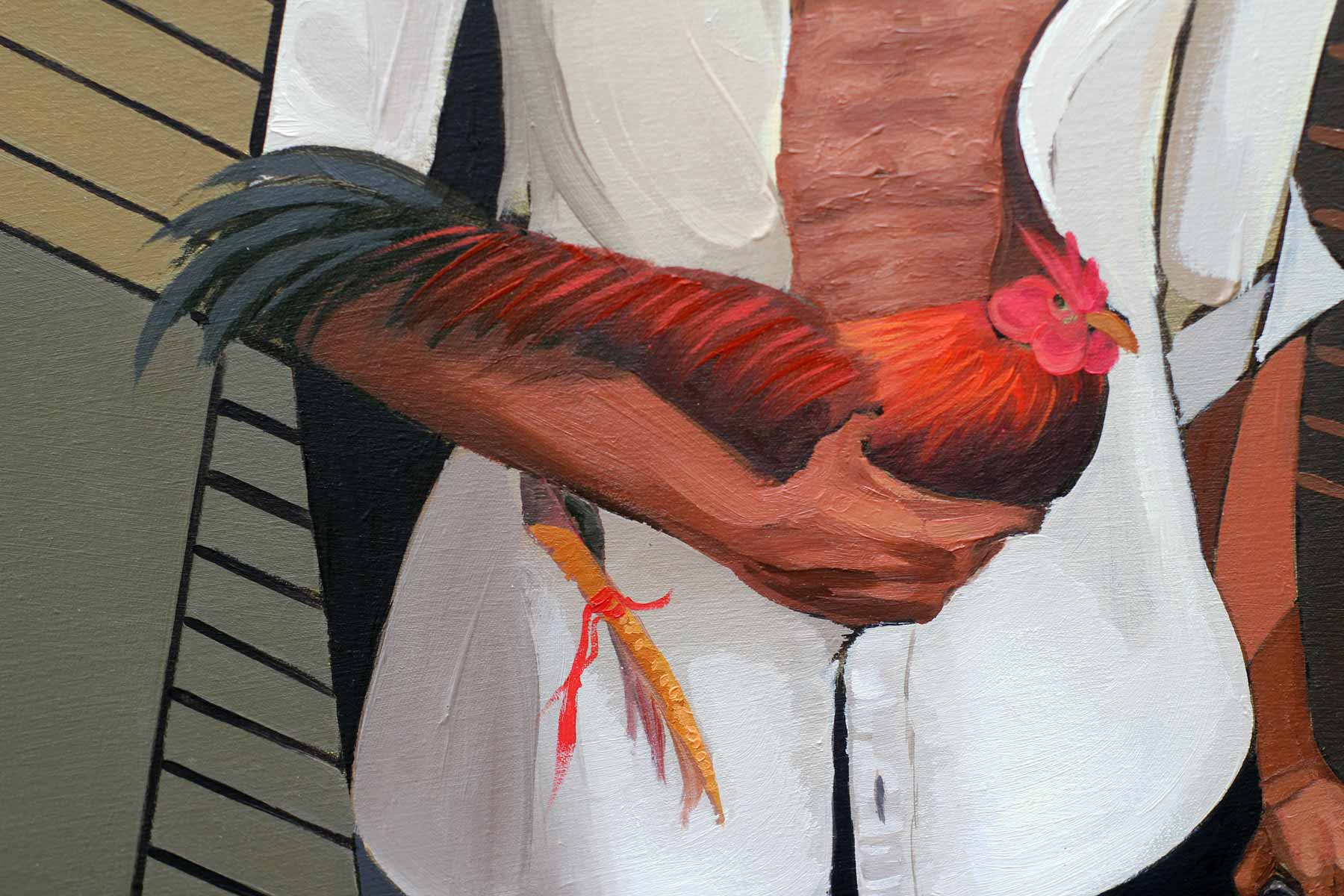
Gallero is a contemporary figurative oil painting that portrays a rooster handler from an elevated viewpoint, transforming an ordinary rural subject into a carefully structured visual narrative. The composition presents the figure standing alone, dressed in a wide-brimmed straw hat, an open white shirt, and dark trousers. His face remains largely hidden beneath the brim of the hat, directing attention toward posture, gesture, and symbolism rather than individual identity.
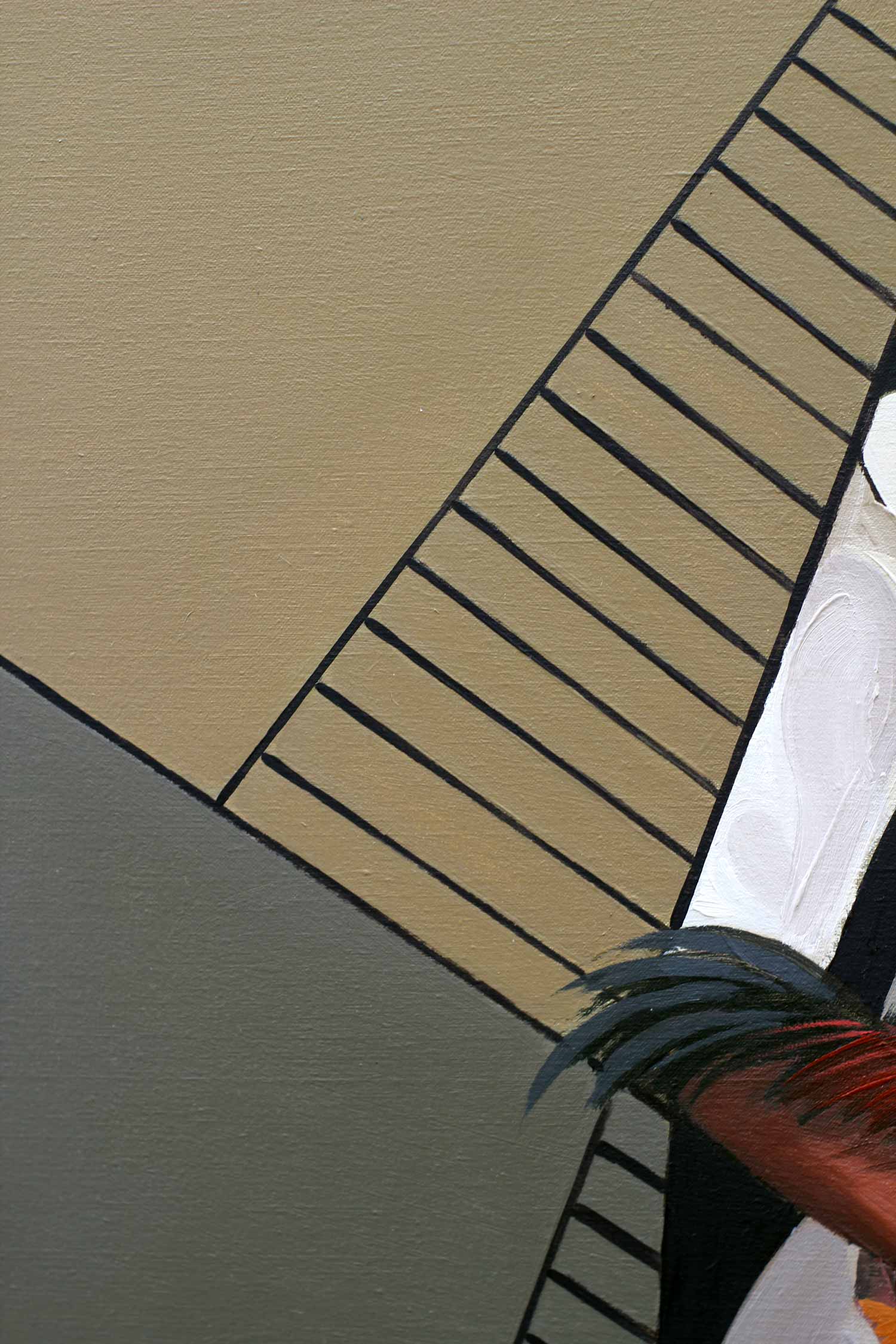
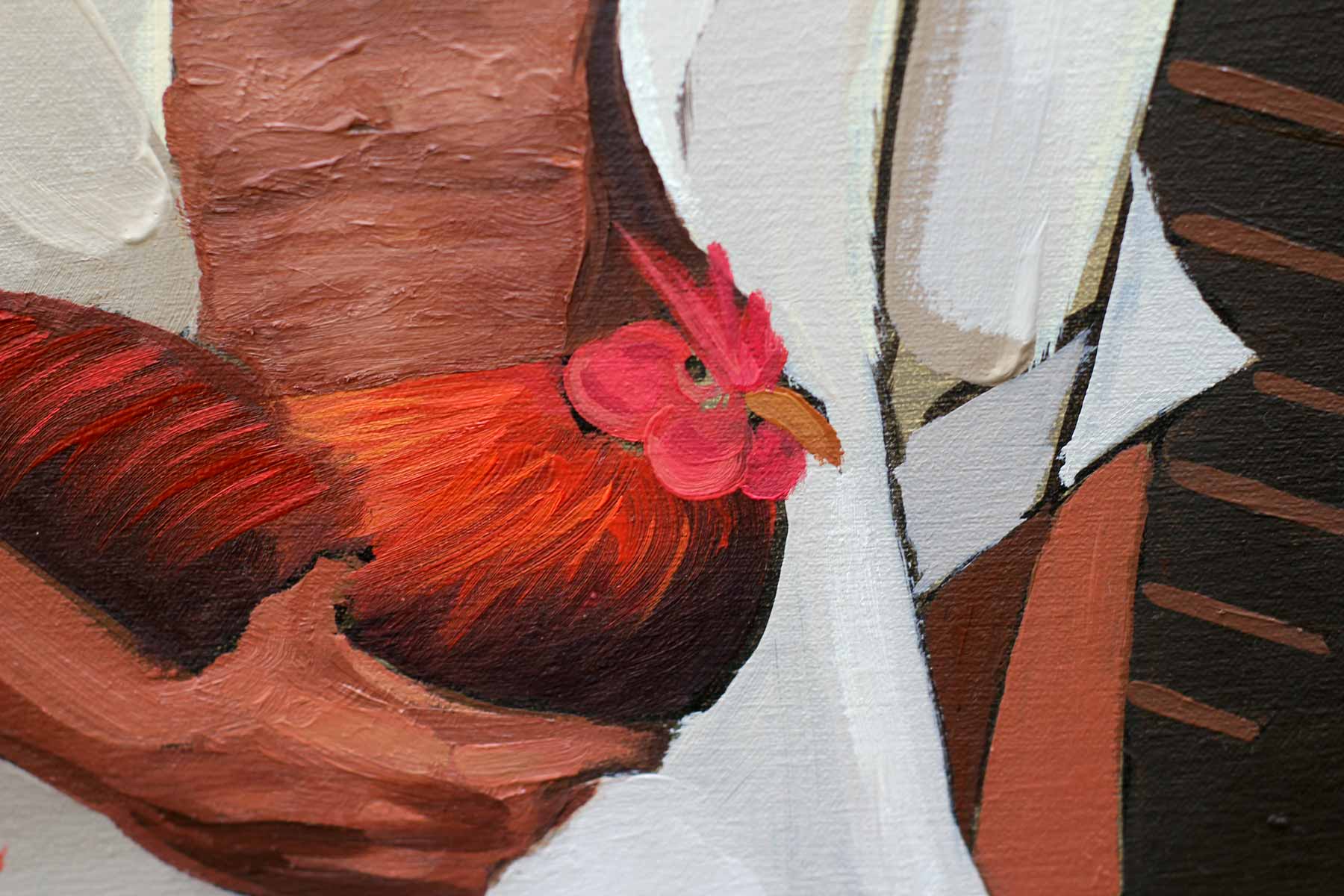
Held securely across the chest is a brightly colored fighting rooster whose vivid red comb, orange plumage, and dark iridescent tail feathers immediately become the visual focal point of the composition. The bird introduces warmth and energy into an otherwise restrained chromatic palette composed of earth browns, ochres, charcoal blacks, muted grays, and soft olive greens. These colors evoke the atmosphere of the Caribbean countryside while reinforcing the painting’s quiet, contemplative mood.
The handler supports himself with a walking cane held in his opposite hand, an element that subtly suggests age, endurance, wisdom, and the continuity of tradition. Rather than depicting action or spectacle, the painting captures a moment of stillness and reflection, emphasizing the intimate relationship between the human figure and the animal. The rooster is not portrayed as an object of conflict but as a companion carried with care and familiarity.
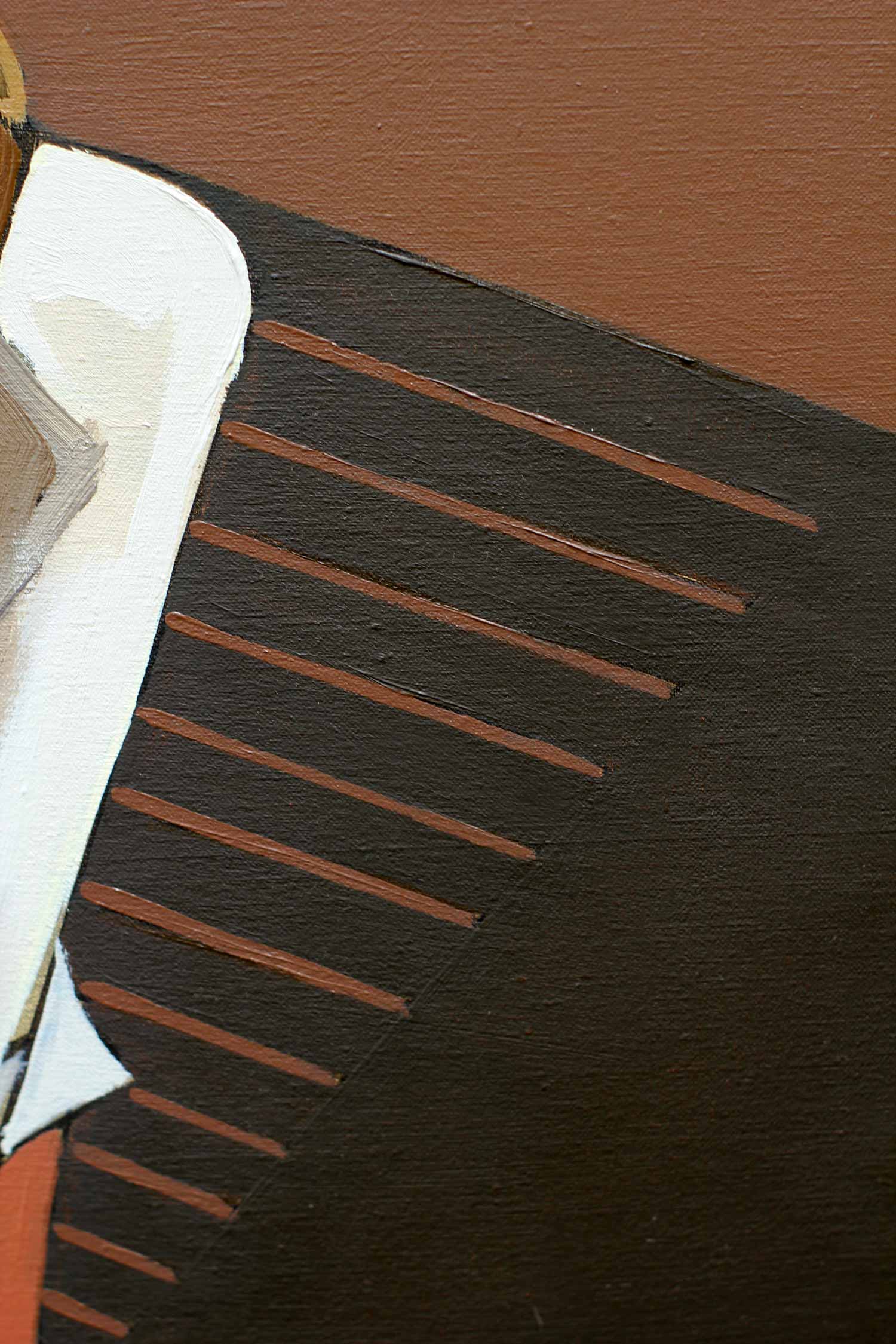
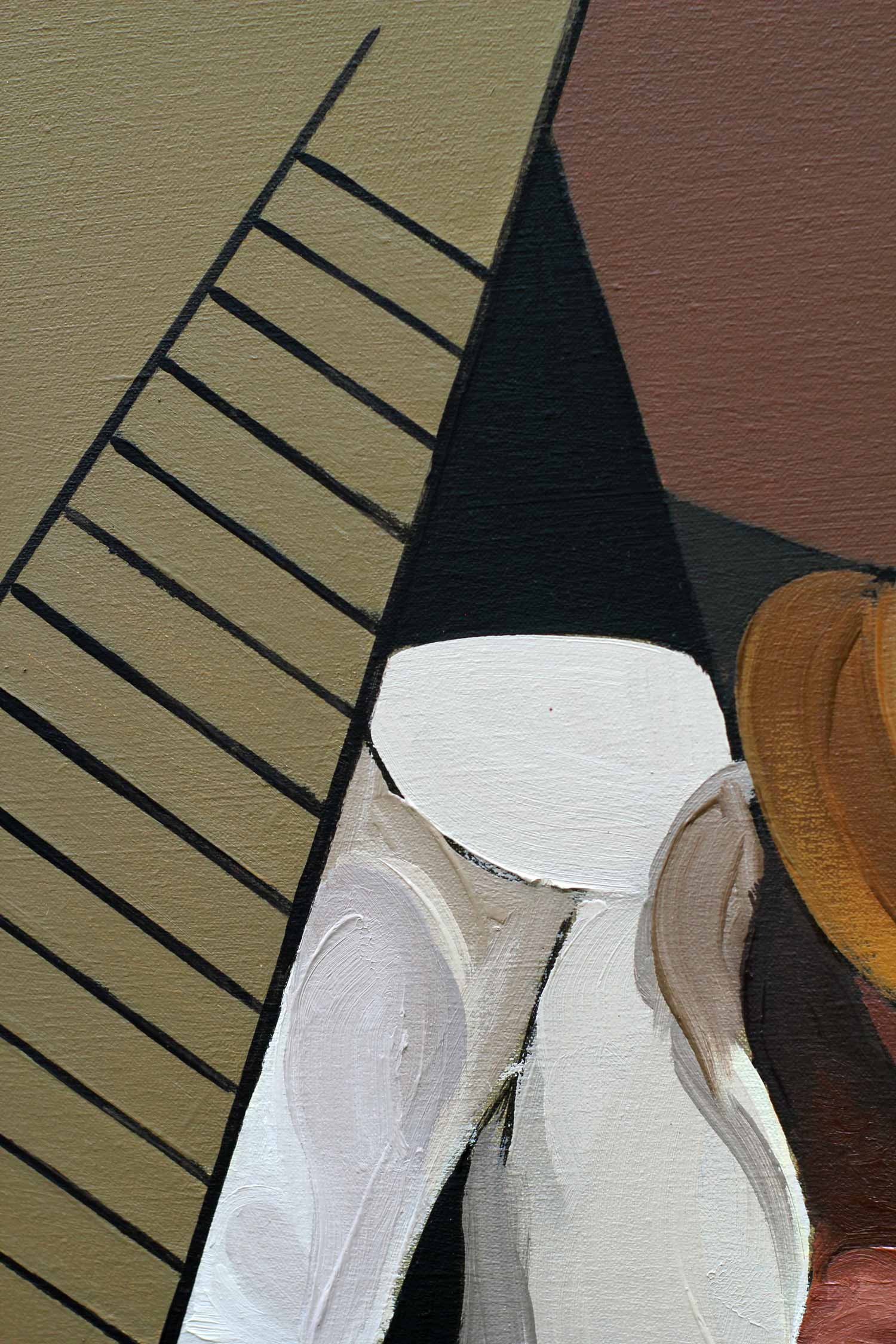
Behind the figure, the background is organized into intersecting geometric planes that divide the pictorial space into large angular fields of color. Parallel diagonal lines cross portions of these planes, introducing rhythm, balance, and architectural order. This geometric structure contrasts with the organic curves of the figure, the hat, and the rooster, creating a dynamic dialogue between abstraction and representation. The elevated perspective reinforces this interplay by flattening spatial relationships while maintaining a convincing sense of depth.
The painting demonstrates a synthesis of figurative realism and geometric abstraction. Simplified anatomy, deliberate contours, and carefully modeled volumes coexist with expressive, visible brushstrokes that preserve the tactile qualities of oil paint. Thick applications of pigment remain evident in areas such as the shirt, skin, and rooster, allowing the texture of the canvas and the movement of the brush to become active components of the visual experience.
Light is treated with restraint rather than dramatic contrast. Soft transitions across the clothing, hat, and bird create volume without sacrificing the painting’s graphic clarity. The composition relies on tonal harmony instead of intense chiaroscuro, allowing shapes and colors to define the emotional atmosphere.
Inspired by Dominican rural culture, Gallero explores themes of identity, labor, memory, dignity, and cultural heritage. The rooster handler represents generations of rural life in which daily customs, craftsmanship, and personal resilience form part of a shared cultural identity. By avoiding anecdotal details and emphasizing essential forms, the work transcends literal documentation and becomes a broader meditation on tradition and the enduring relationship between people, animals, and place.
The elevated viewpoint encourages viewers to observe the subject with quiet contemplation rather than direct confrontation. This unusual perspective introduces psychological distance while simultaneously creating intimacy through the protective gesture of holding the rooster close to the body. The resulting composition balances strength with vulnerability, geometry with organic life, and cultural specificity with universal human themes.