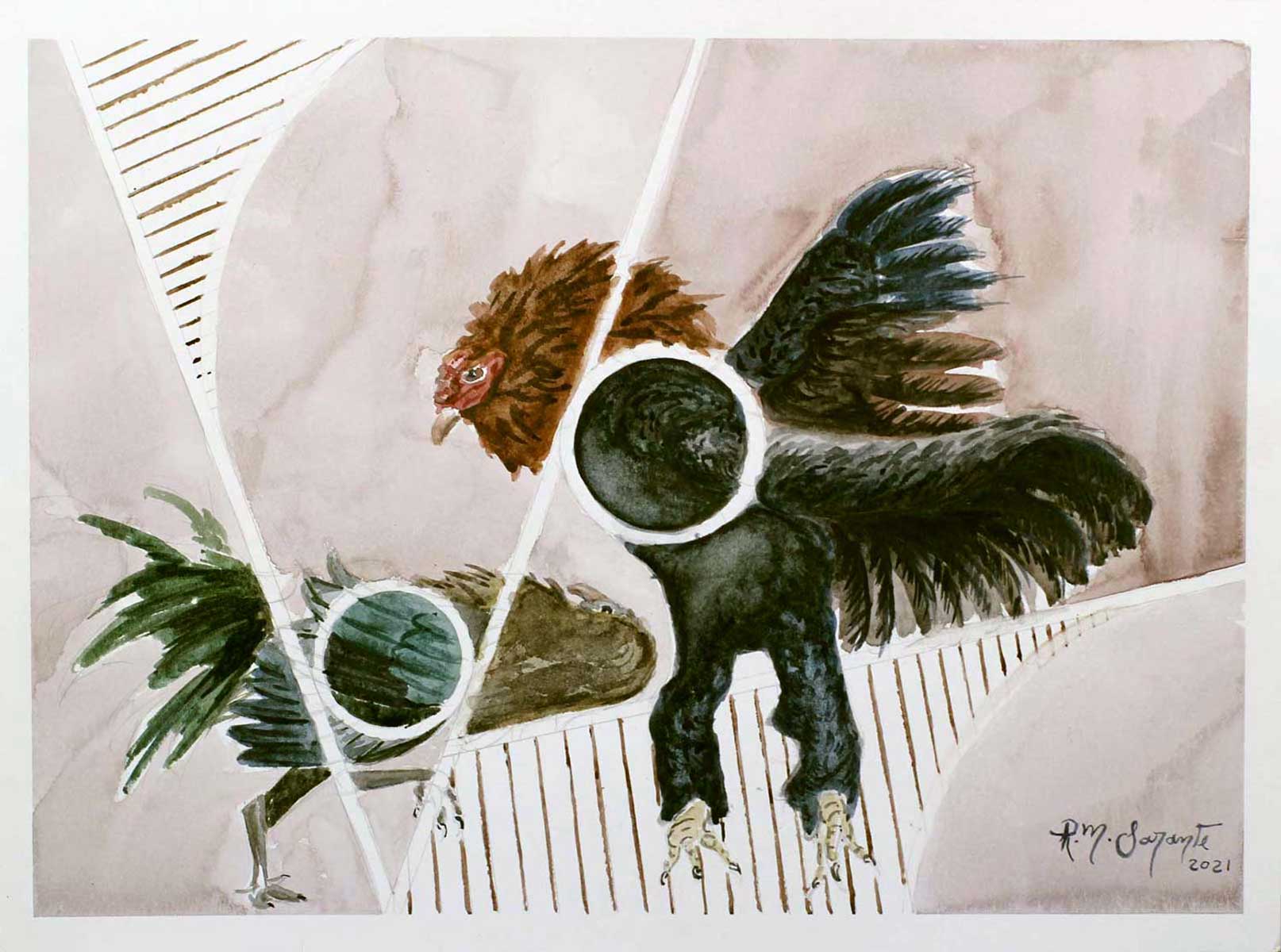
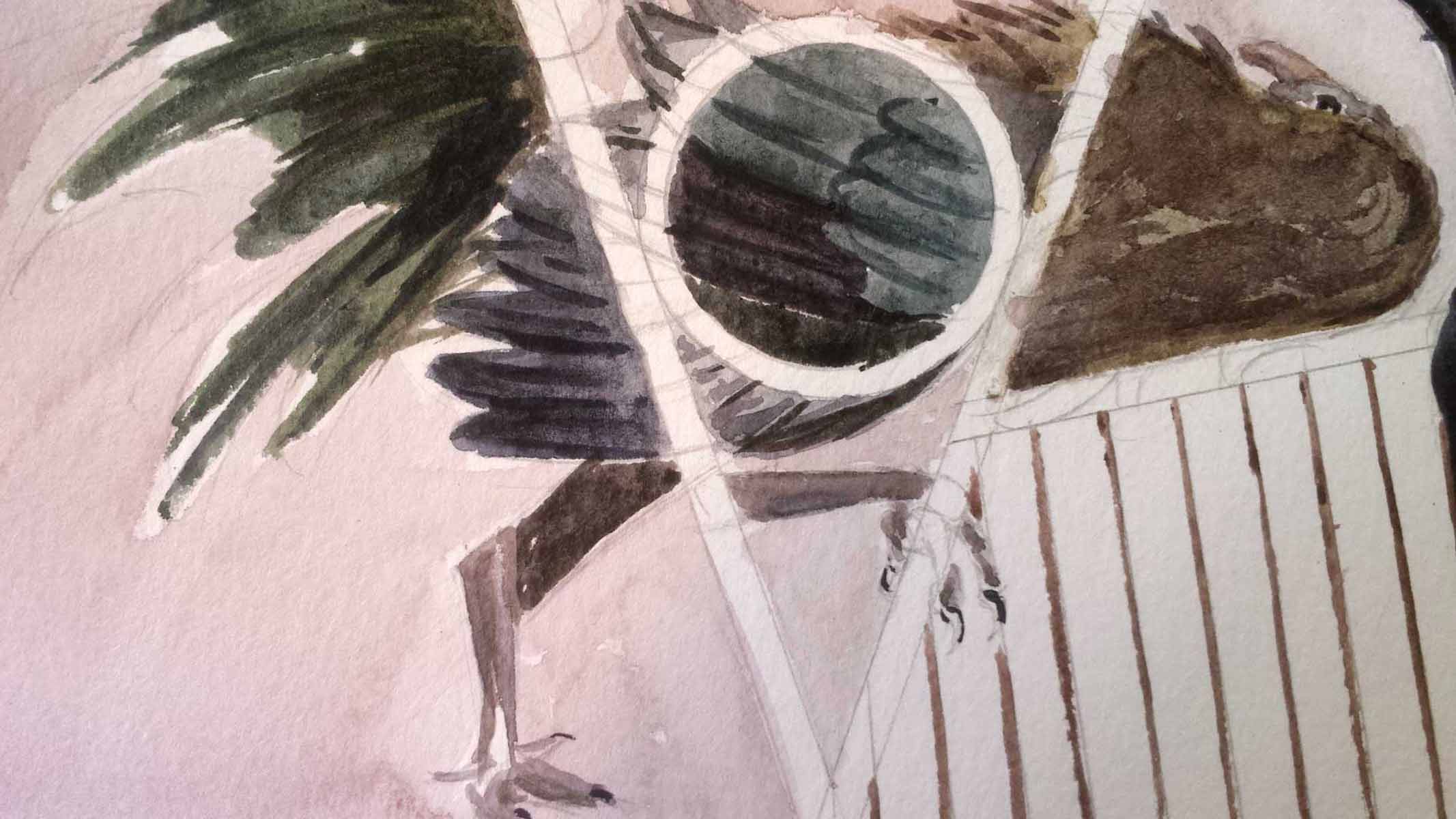
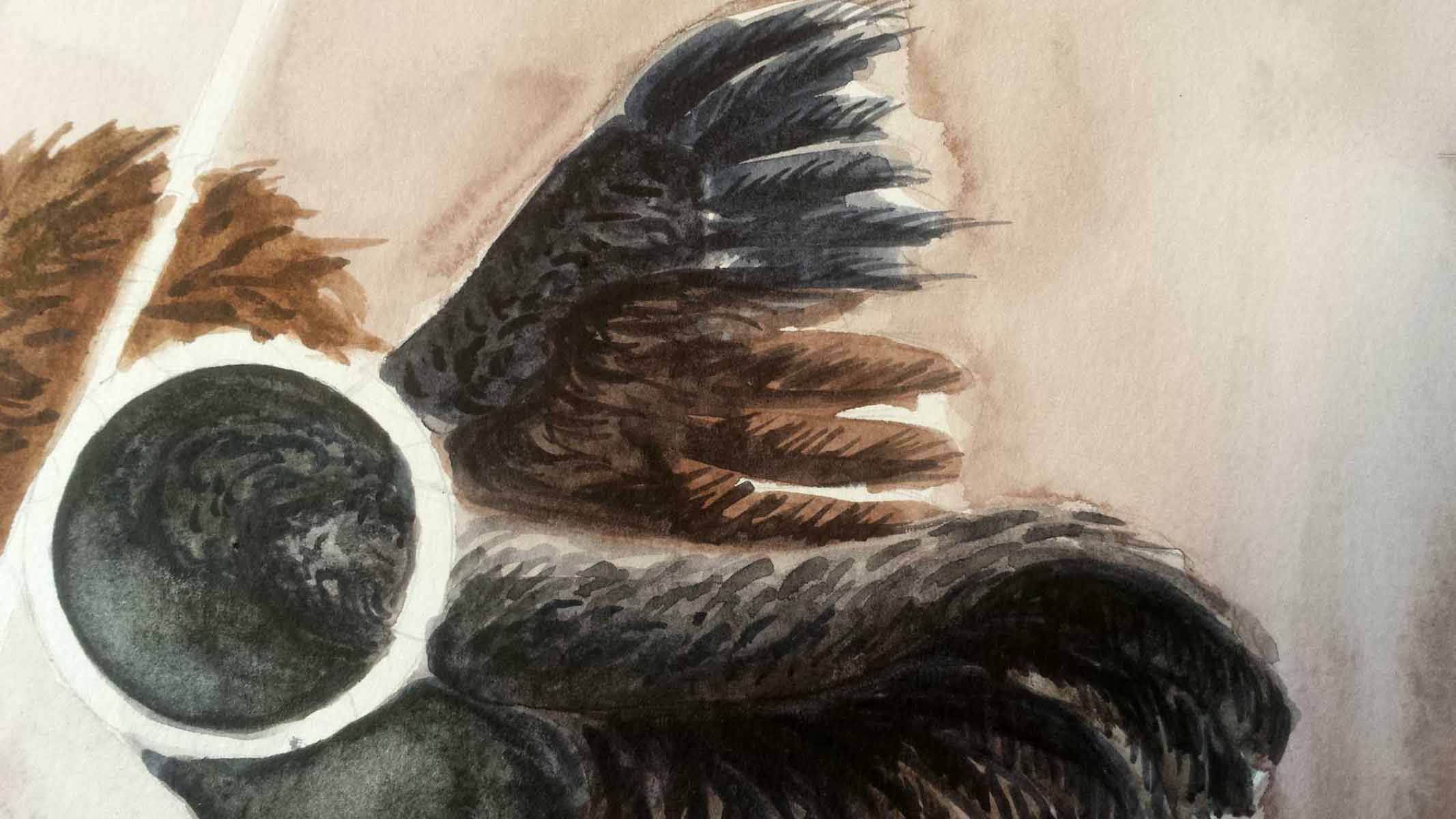
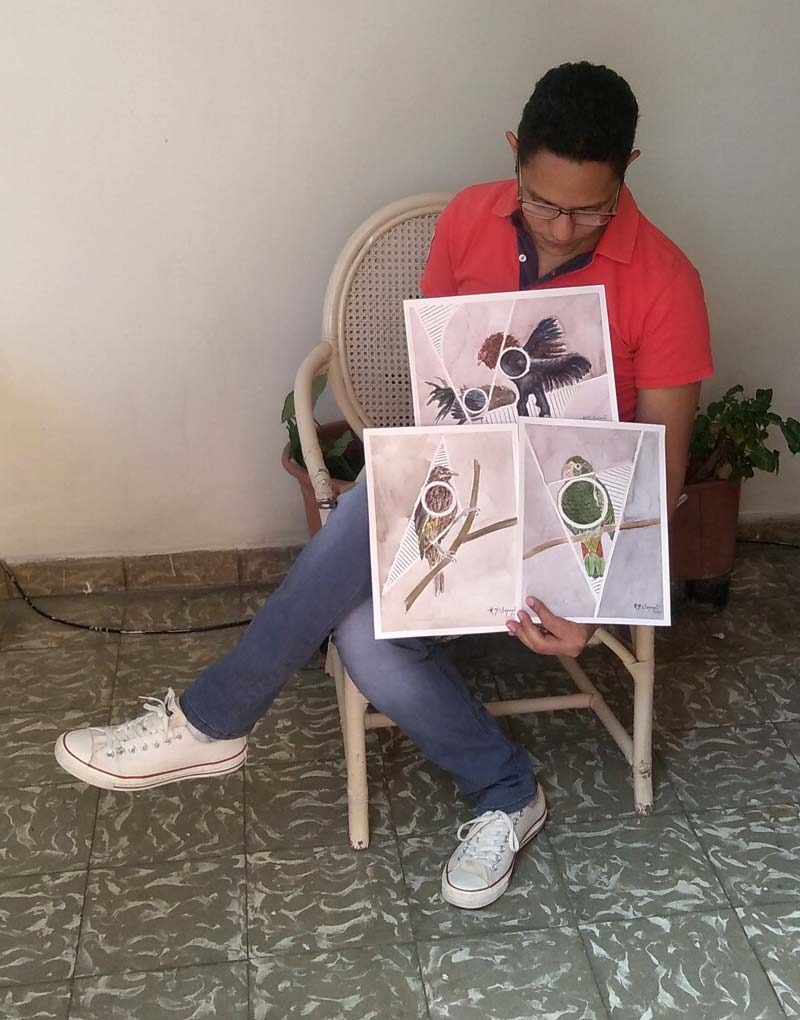
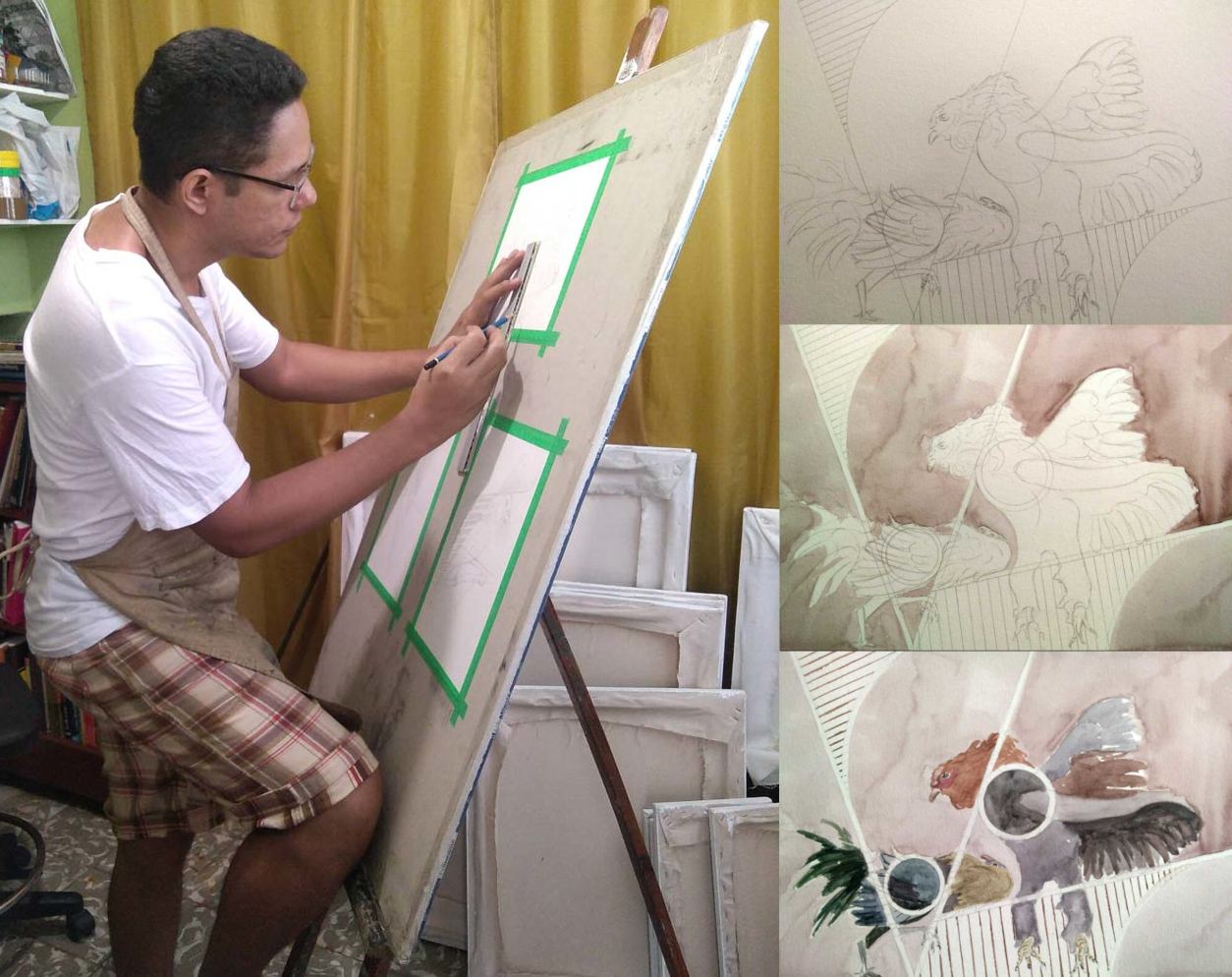
This original watercolor presents a contemporary interpretation of the traditional cockfight through a composition that prioritizes geometry, rhythm, and visual balance over narrative realism. Two roosters occupy opposite sides of the composition, their bodies fragmented and reorganized through intersecting circles, triangular planes, and parallel linear structures that transform a familiar rural subject into an abstract study of form and movement.
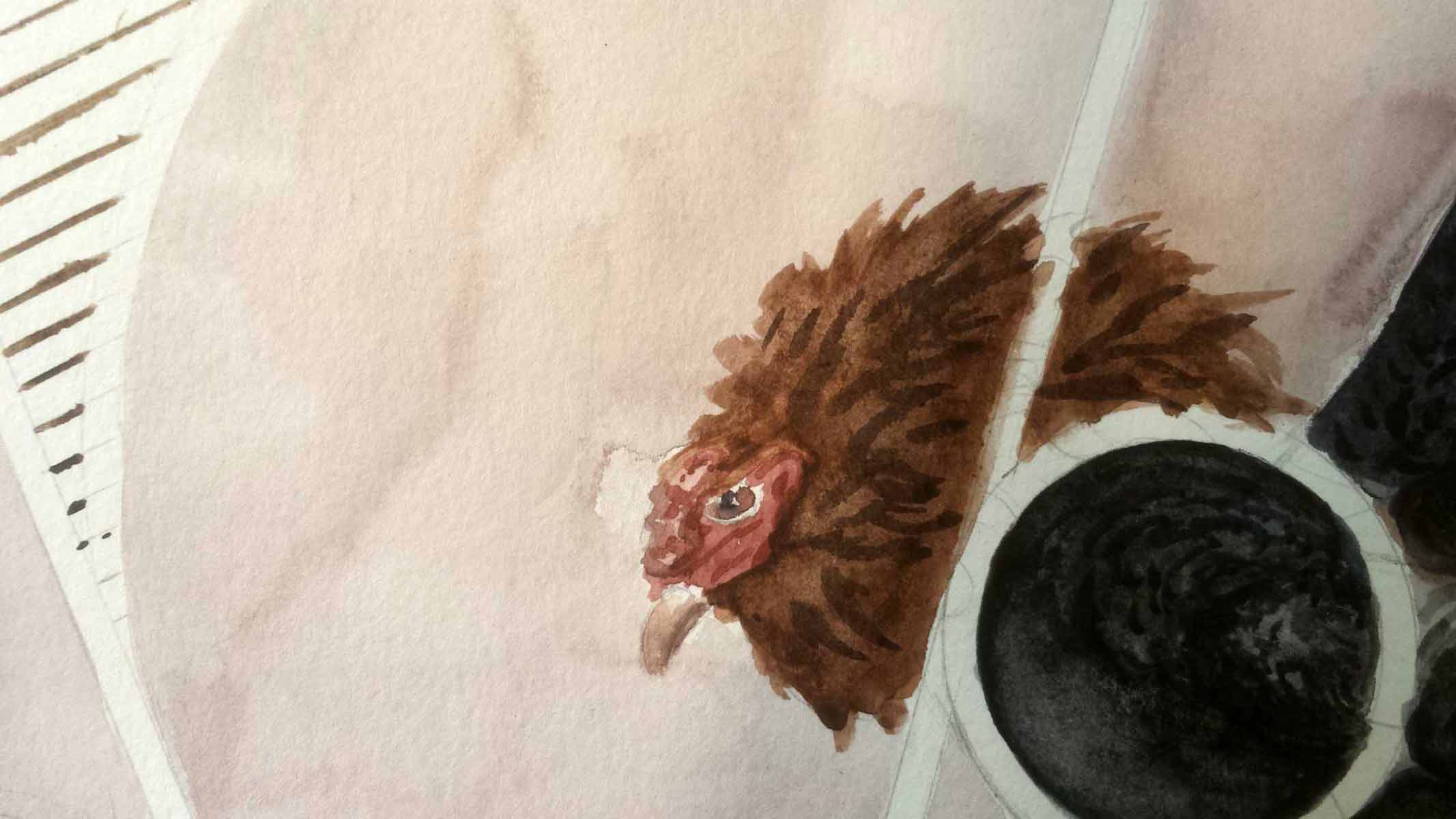
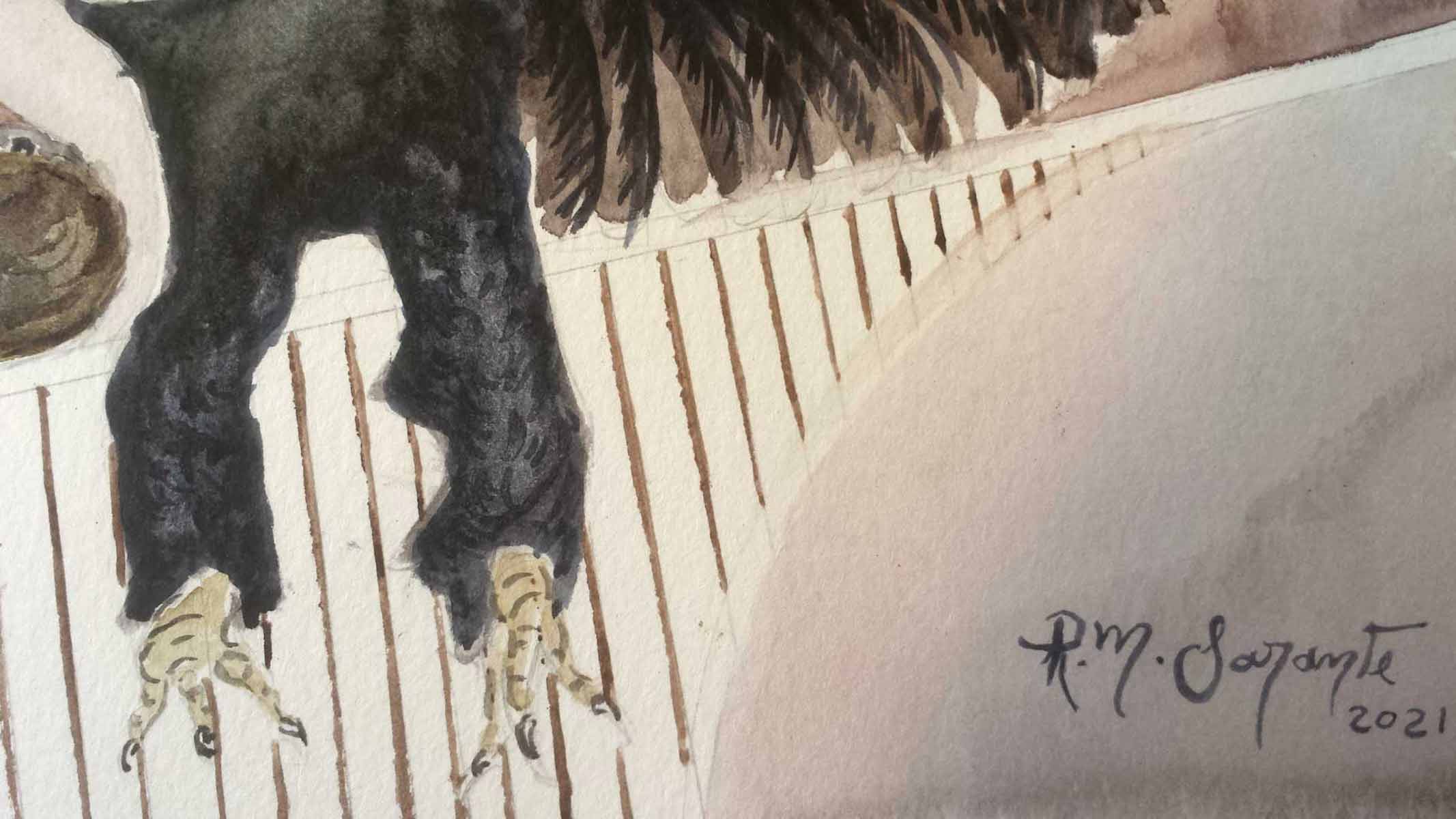
The left rooster appears calm and grounded, while the opposing bird raises its wings in a gesture filled with tension and energy. Rather than illustrating a literal confrontation, the artwork suggests opposing forces through posture, direction, and compositional contrast. Circular motifs overlap the bodies, functioning as visual anchors that unify the composition while emphasizing mass and proportion. Angular white divisions and evenly spaced linework create a structural framework reminiscent of architectural drawing, introducing precision that contrasts with the spontaneity of transparent watercolor.
A restrained palette of earthy browns, charcoal blacks, muted greens, warm grays, and soft beige washes allows the expressive brushwork to define feather textures and anatomical forms. Loose yet deliberate strokes capture the softness of plumage and the dynamic movement of raised wings, while the preserved white of the paper enhances luminosity and reinforces the geometric construction.
The composition explores the relationship between tradition and abstraction, transforming a culturally recognizable subject into a study of balance, tension, and spatial organization. Rather than focusing on spectacle, the painting emphasizes formal composition, negative space, and the expressive qualities of watercolor, inviting viewers to contemplate movement through structure and geometry.
Suitable for collectors of contemporary watercolor, figurative abstraction, wildlife-inspired art, and modern works that reinterpret cultural themes through minimalist geometric language, the piece bridges representational observation with abstract design.