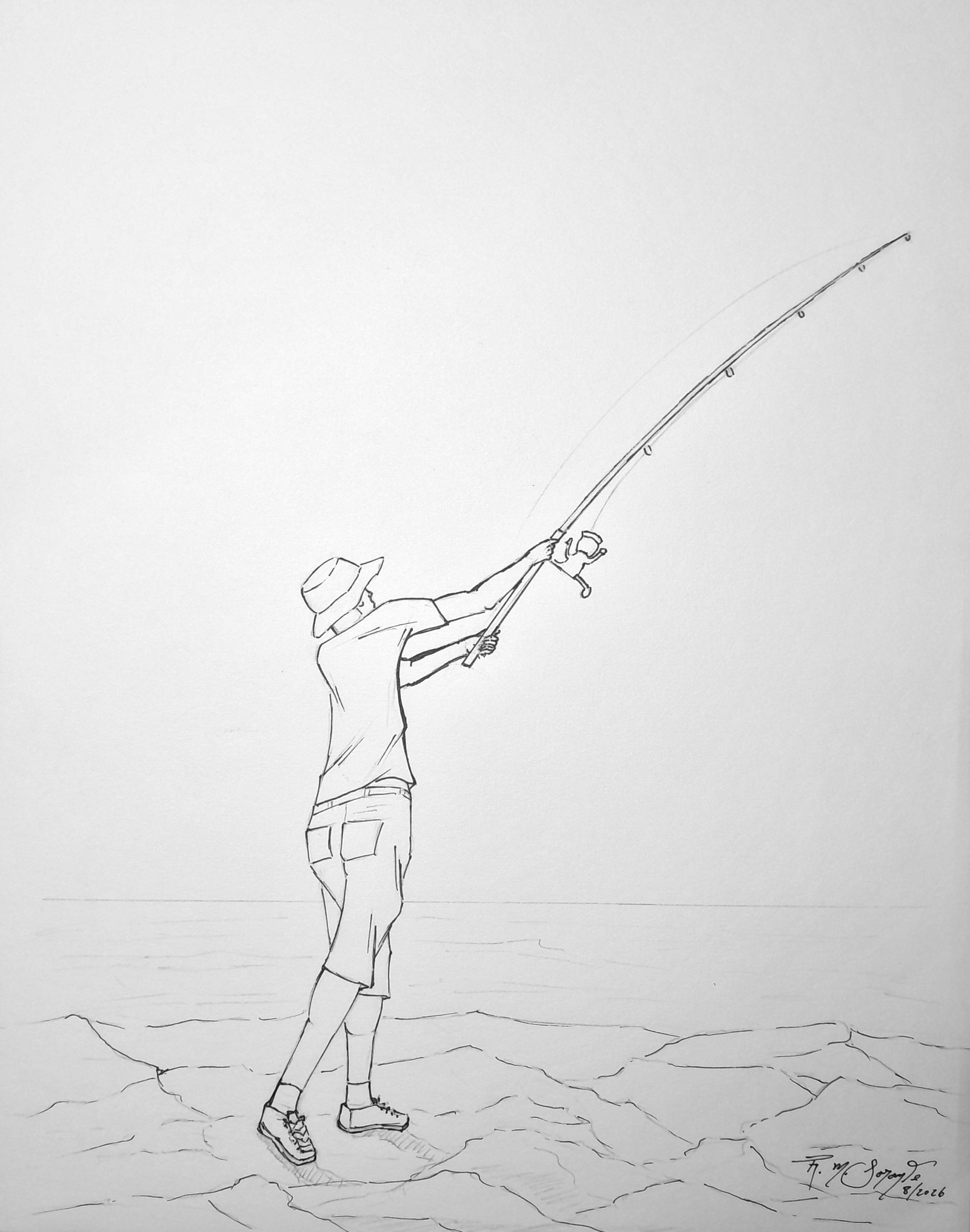
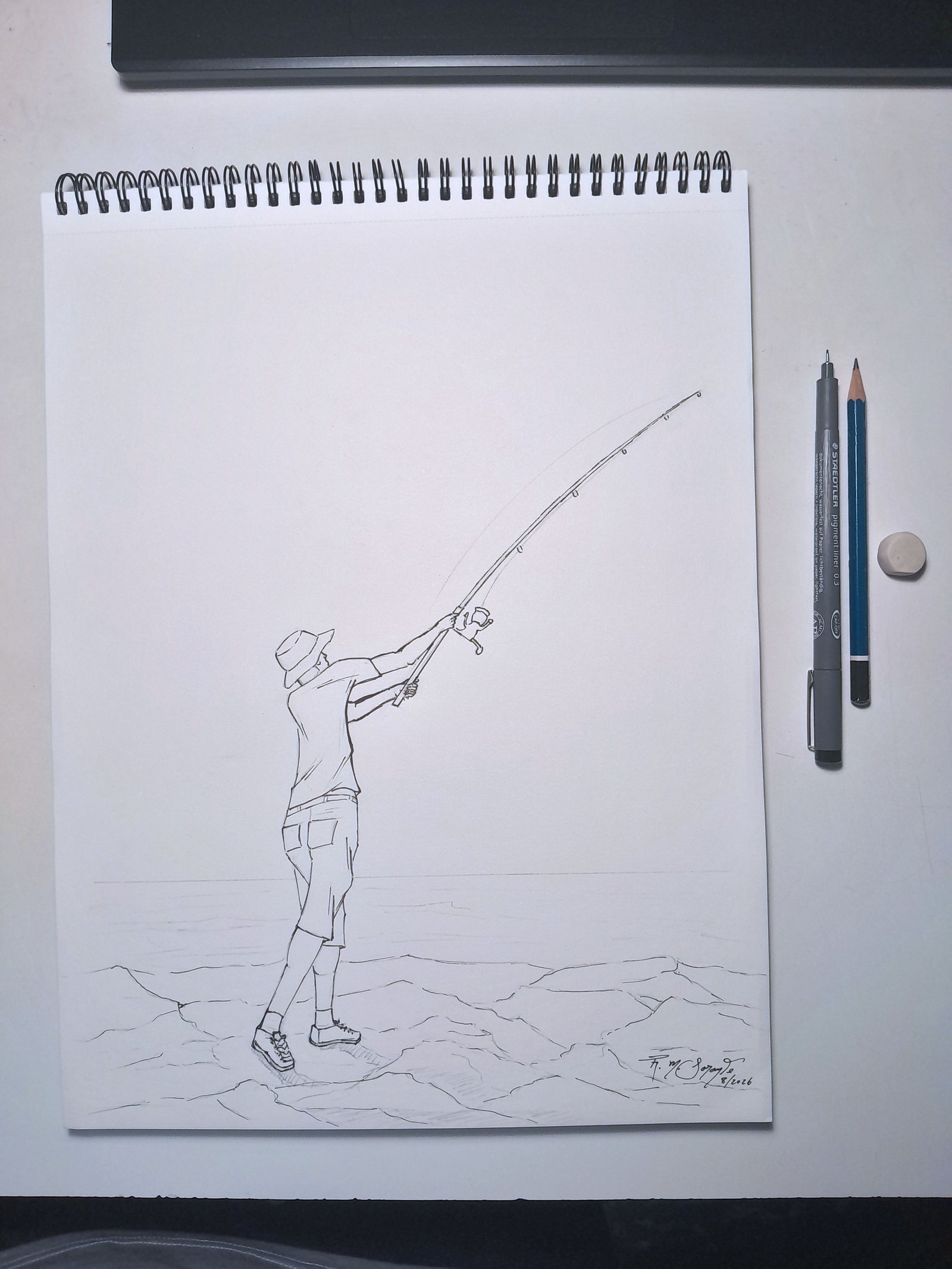
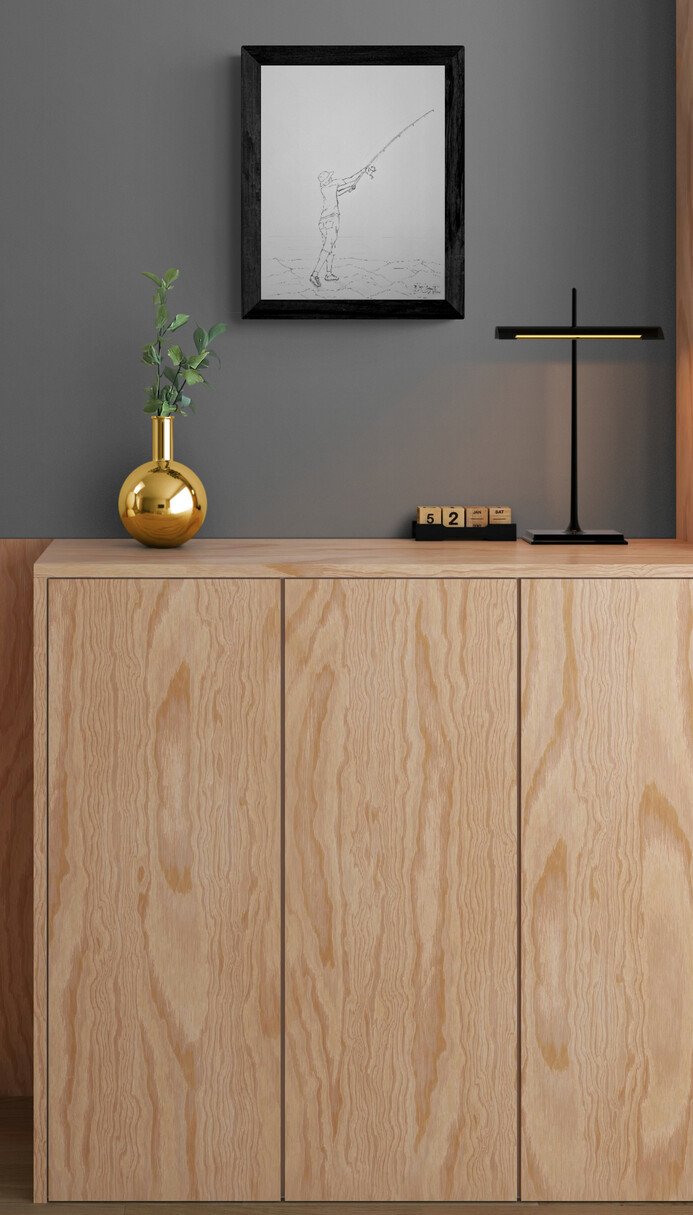
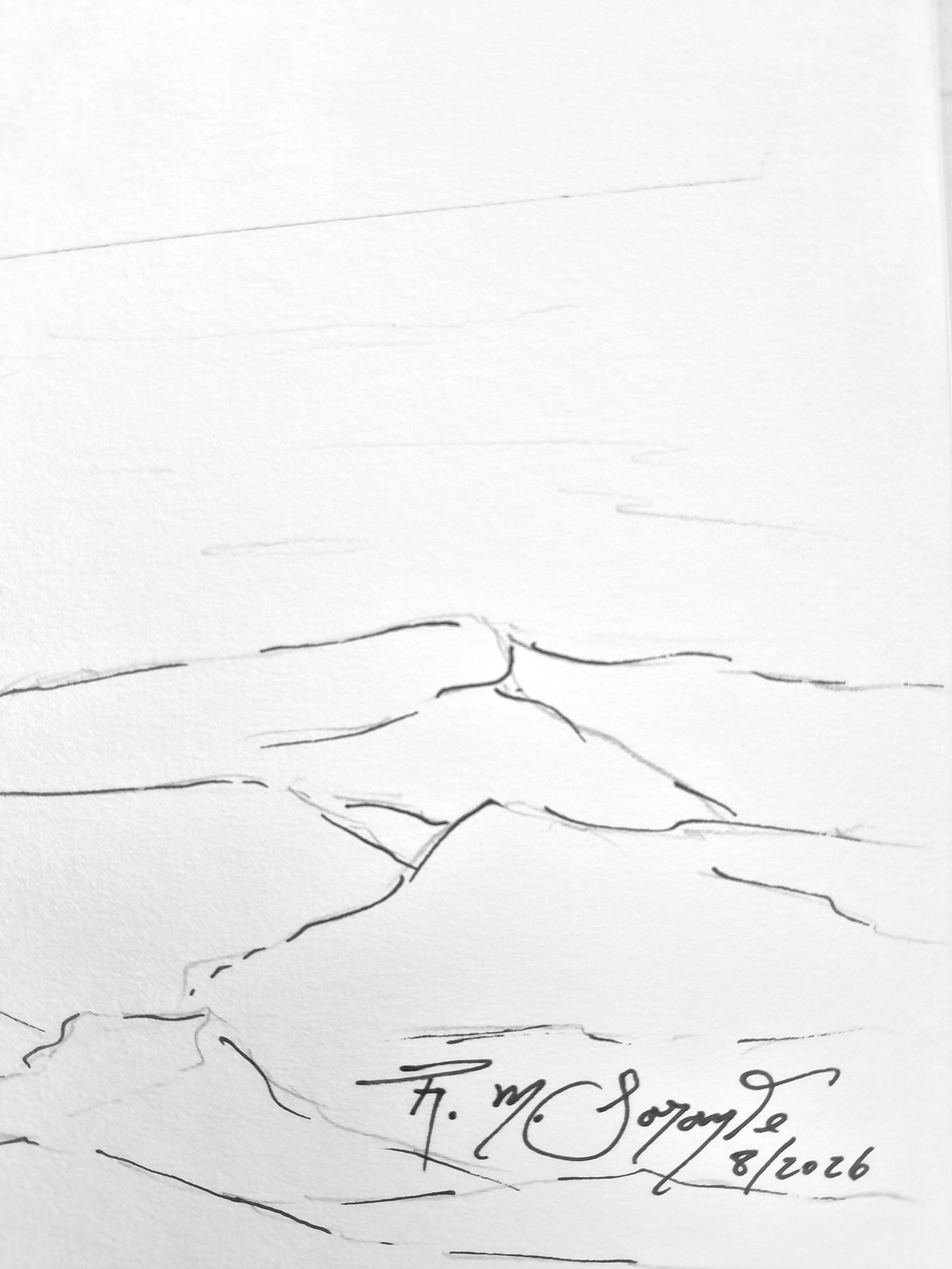
Fisherman No. 3 is a figurative drawing created with technical pen and graphite on 120 gsm paper. The composition portrays a fisherman standing on an irregular rocky shoreline while pulling upward on a long fishing rod. Seen primarily from behind and in profile, the figure leans his body away from the direction of the rod, suggesting the physical tension of controlling the fishing line. The sea extends horizontally behind him, while a large area of untouched paper forms an open sky above the horizon.
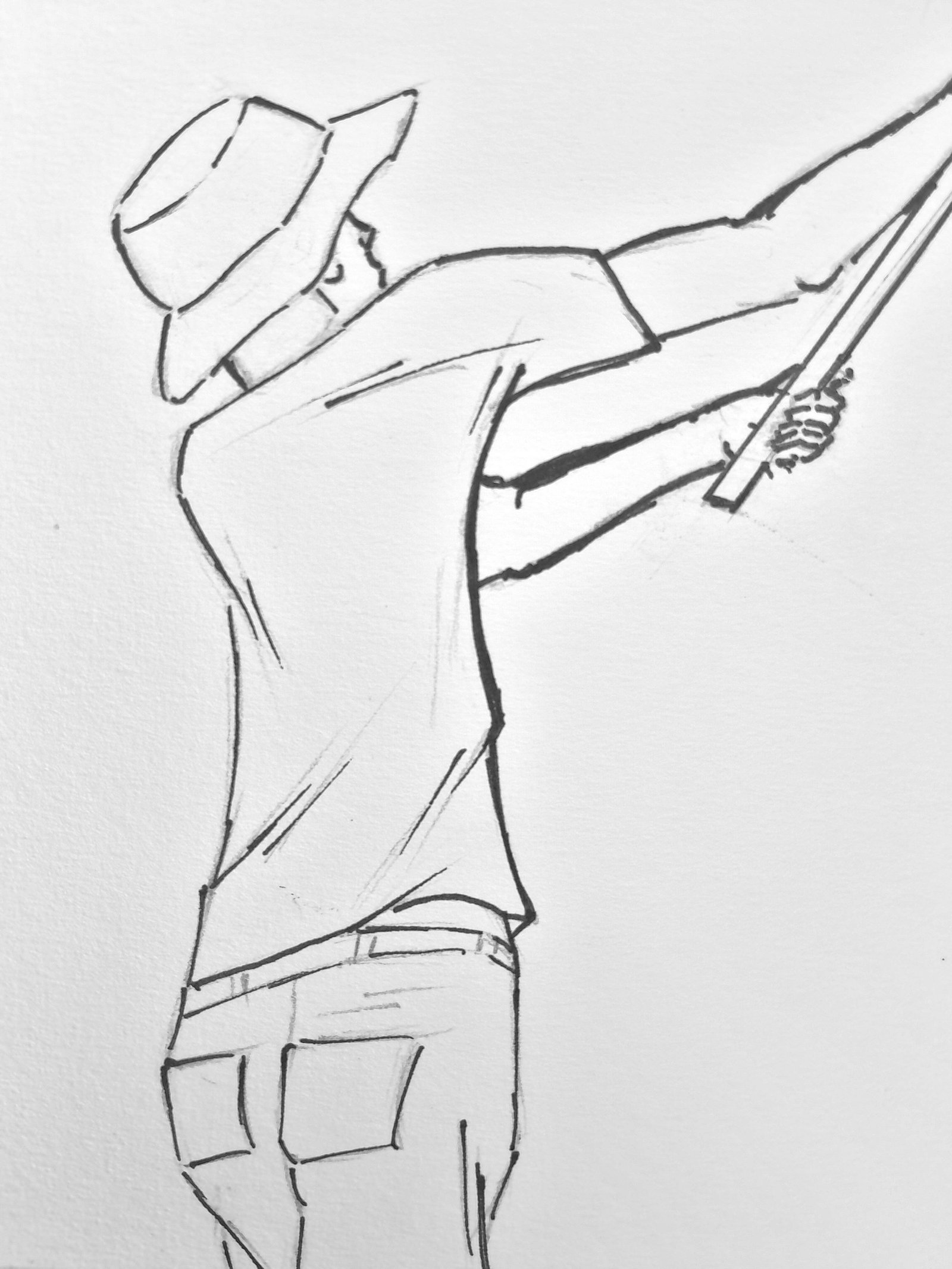
The fisherman occupies the left-central portion of the composition. He wears a brimmed hat, short-sleeved shirt, knee-length shorts, socks, and lace-up shoes. His clothing and body are defined predominantly through controlled technical-pen contours, with short interior lines indicating folds, seams, pockets, and changes in the orientation of the fabric. His face is only partially visible beneath the hat, directing attention toward his posture and the physical action rather than individual facial features.
Both arms extend upward and toward the right as the fisherman grips the rod with his hands. His upper body leans backward while his legs establish a wide, uneven stance on the rocks. This positioning conveys balance and resistance, as though he is responding to a strong pull from the fishing line. The relationship between the backward-leaning body and the upward sweep of the rod generates the principal sense of movement in the composition.
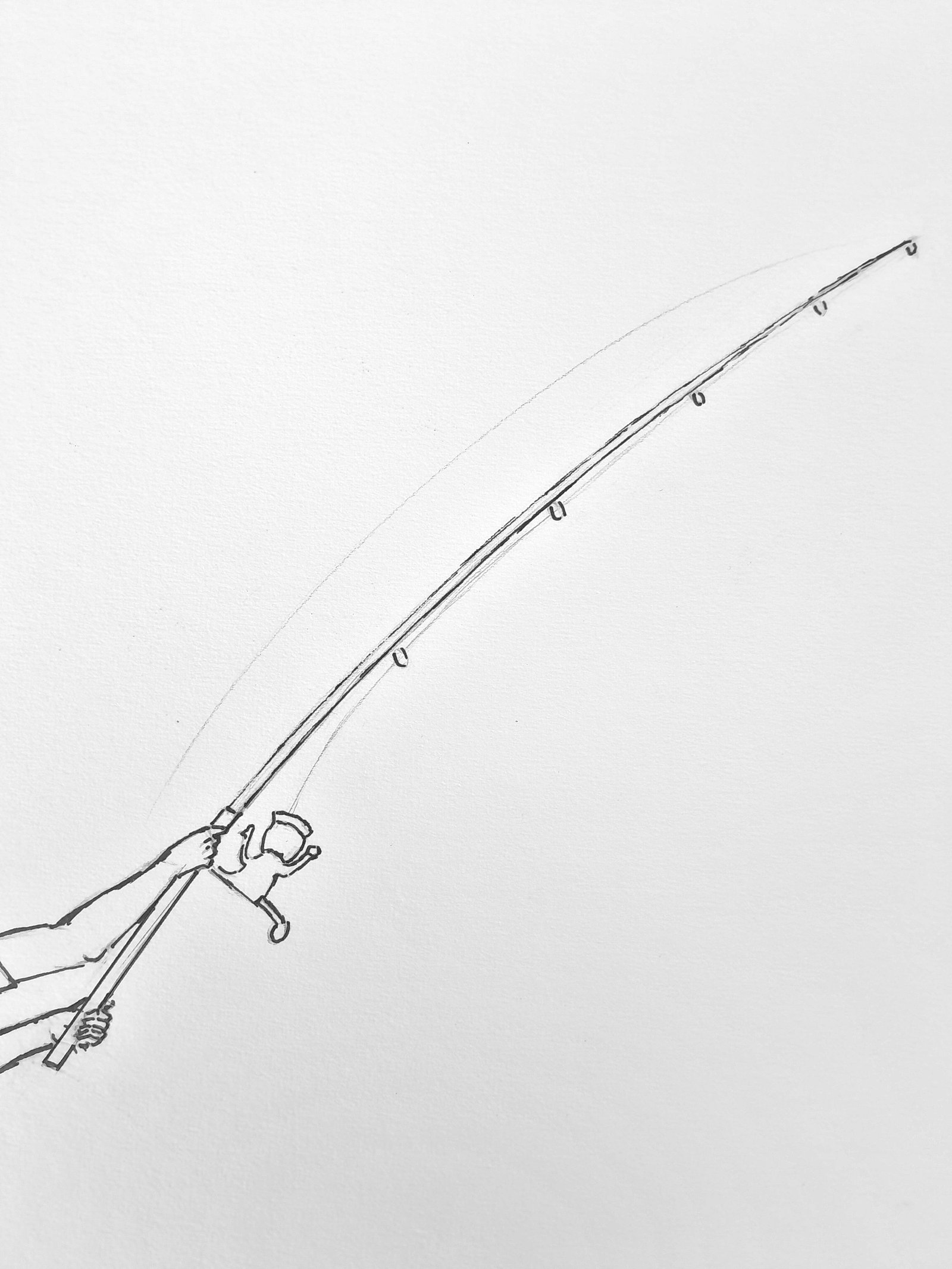
The fishing rod is the most pronounced linear element in the work. Beginning at the fisherman’s hands, it rises diagonally across the large open space of the upper-right portion of the drawing. Its shaft bends into a long arc, visually communicating tension. Small line guides appear at intervals along the rod, while the reel and handle are rendered with more concentrated technical-pen detail near the fisherman’s hands. A faint graphite line follows the curve of the rod, reinforcing the trajectory of the fishing line.
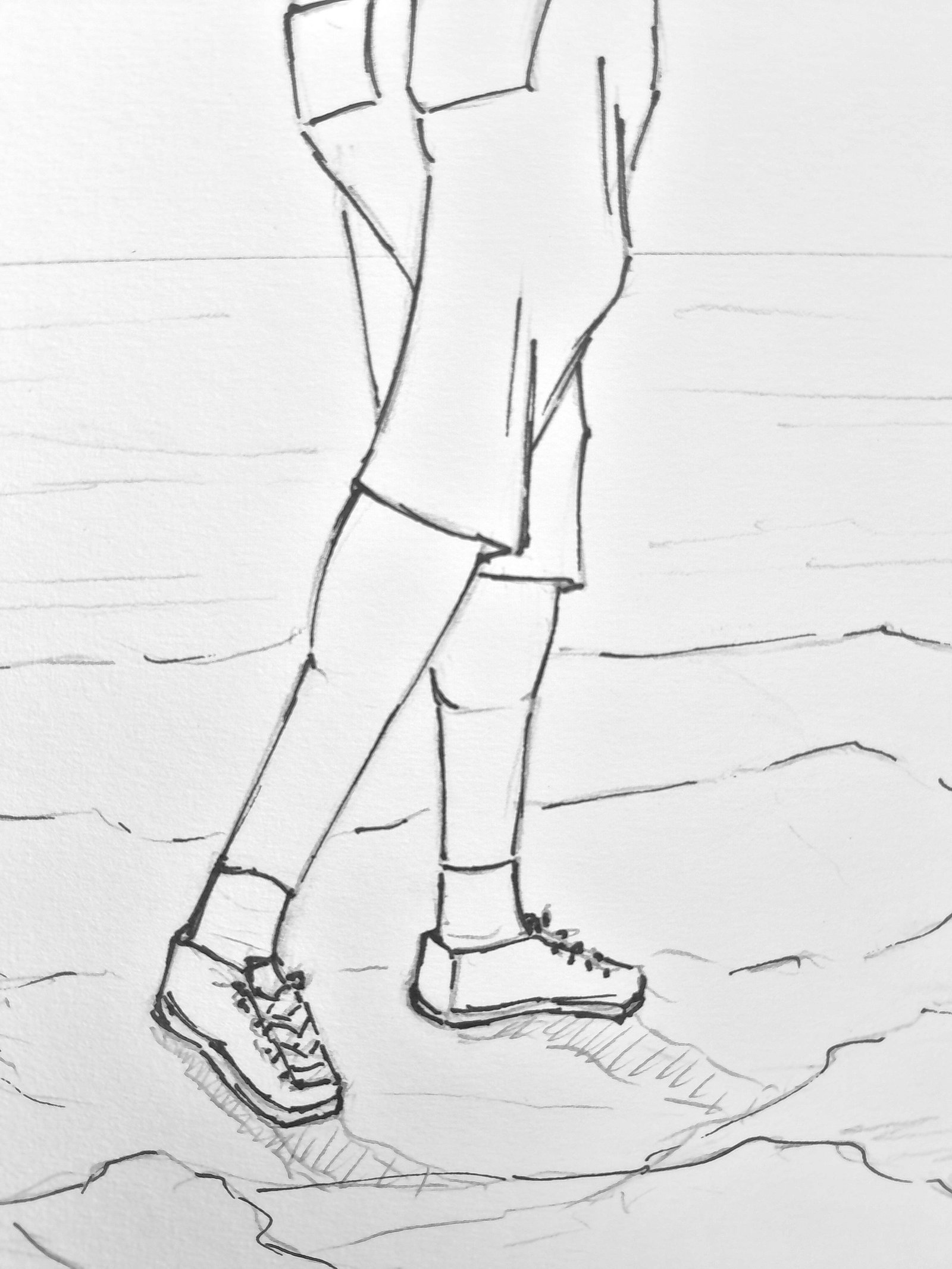
The fisherman stands on an uneven coastal surface composed of overlapping rocky formations. These are outlined with a combination of technical pen and lighter graphite marks, creating irregular shapes beneath and around his feet. Small areas of graphite hatching form cast shadows below his shoes and between portions of the rocky ground, helping anchor the figure within the landscape.
Beyond the rocks, a restrained horizontal line establishes the horizon and separates the sea from the open sky. The water is suggested through a limited number of delicate horizontal graphite strokes rather than dense shading. This minimal treatment allows the natural paper to become an active component of both the marine environment and the sky, preserving the spacious quality of the composition.
The drawing relies on the contrast between the structural precision of technical pen and the softer, atmospheric character of graphite. The figure, fishing equipment, and principal edges of the rocky terrain receive the strongest linear definition, while graphite is used selectively for water, shadows, textures, and subtle environmental indications. Large areas of negative space emphasize the solitary fisherman and make the dramatic curve of the fishing rod particularly prominent.
Through the fisherman’s stance, extended arms, and strongly bent rod, Fisherman No. 3 captures a moment of physical effort and concentration associated with recreational or coastal fishing. The composition focuses on the interaction between the human figure, fishing equipment, and rocky marine environment while maintaining the economical visual language of a line drawing. The artist’s handwritten signature and the date 8/2026 appear in the lower-right corner.